

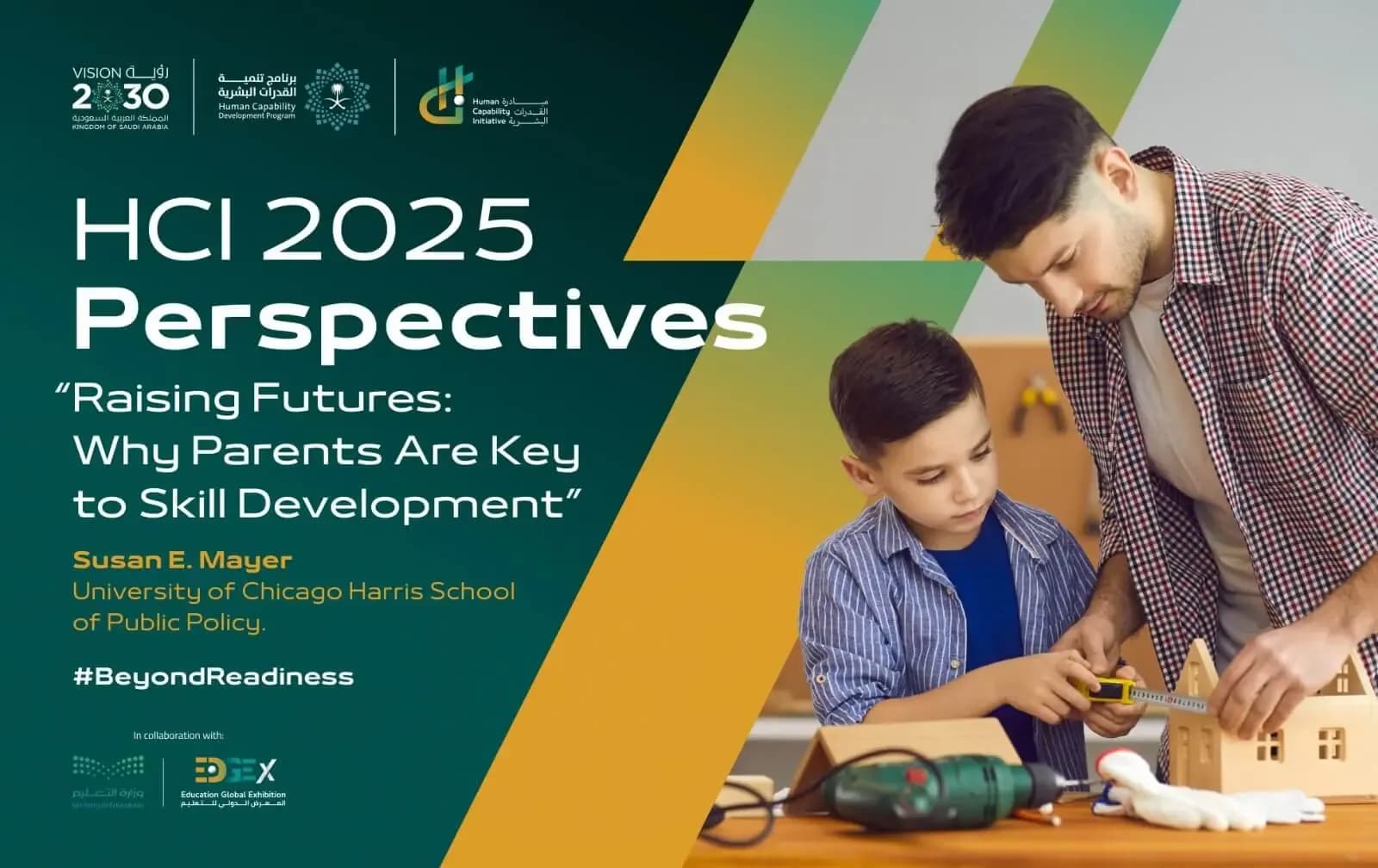
Acquiring cognitive skills is essential for the economic well-being of individuals. The evidence is compelling: across 22 OECD countries, a single standard deviation increase in literacy or math skills correlates with 20% higher earnings, translating to more than $1 million over a person’s working life. Even at the national level, higher average skills are strongly associated with greater innovation, entrepreneurship, and GDP growth.
Most countries invest heavily in schools to boost children’s cognitive skills. When these skills do not improve, schools are blamed, and educational reforms are pushed as the primary solution, even though evidence suggests that schools cannot close skill gaps on their own.
Consider a child who attends full-day preschool for two years followed by 13 years of compulsory schooling, never missing a single day. By the time they turn 18, that child will have spent only about 14% of their waking hours in school. The remaining 86% is spent with parents or in environments selected by them. This large proportion of time carries significant learning potential that cannot be ignored.
In fact, time spent with parents is so consequential to skill development that gaps in cognitive ability between children emerge before formal schooling even begins. By age 3, significant differences in cognitive scores are already apparent between children whose mothers have different levels of education.
These gaps emerge as a result of differences in parental behavior, not parental goals or beliefs. Research at the Behavioral Insights and Parenting Lab (BIP Lab) at the University of Chicago found that all parents, regardless of education or income, believe that spending more time engaged with their child in learning activities leads to more learning, that they should spend about 53 minutes per week in learning activities with their child, and that high academic achievement is important for a successful life.
And yet, despite these shared beliefs, differences in parental behavior persist. For example, parents without a bachelor’s degree spend about 18 fewer minutes per day in learning activities with their children compared to more educated parents. This adds up to approximately 104 hours per year, equivalent to a month of full-day preschool annually.
References: Heckman, James. (2011). The American Family in Black and White: A Post-Racial Strategy for Improving Skills to Promote Equality. Daedalus 140(2). American Academy of Arts and Science, Washington, DC; The Early Investments Project https://biplab.uchicago.edu/research/understanding-differences-in-parent-investments/; Kalil, A., Mayer, S., Delgado, W., & Gennetian, L. (2024). The education gradient in parental time investment and subjective well-being. Review of Economics of the Household. https://doi.org/10.1007/s11150-024-09734-5
If all parents hold the same beliefs and strive toward the same parental goals, then why do some parents end up investing less time? Research at the BIP Lab has identified several cognitive roadblocks.
Present bias: many parents struggle with immediate priorities versus long-term investment in their children’s development.
Overconfidence: less-educated parents are more likely to overestimate their children’s academic abilities. In one study, 65% of parents without bachelor’s degrees overestimated their children’s math skills, compared to 40% of parents with degrees.
Identity: individuals, including parents, often identify with more than one role at the same time, such as mother or father, son or daughter, wife or husband, worker, or friend. Some identities are stronger than others, and the most prominent identities carry behavioral prescriptions that affect decision-making. When parental identity is less cognitively prominent, the behavioral propensity to invest time in children may decrease, whether consciously or unconsciously.
Through randomized controlled trials, the BIP Lab has developed effective interventions using behavioral science and technology to help parents overcome these barriers.
PACT and CAPER: a digital library program increased parent reading time by 2.5 times and improved children’s literacy skills by 0.29 standard deviations.
MPACT: high-quality game-based math apps increased children’s math skills by about 30% of a standard deviation in just six weeks.
Priming Parental Identity: text messages that made parental identity salient increased the likelihood of parents making a time investment, namely cashing in an online gift card.
These interventions serve as critical examples of how technology can be harnessed to support learning, not by replacing relationships, but by strengthening and enriching them. One of the greatest risks in the expanding use of technology, particularly AI, is its potential to substitute for human connection during learning. However, when designed thoughtfully, technology can do the opposite: it can reinforce relationships by making meaningful interactions easier and more accessible.
References: Mayer, S. E., Kalil, A., Oreopoulos, P., & Gallegos, S. (2019). Using behavioral insights to increase parental engagement: The Parents and Children Together Intervention. Journal of Human Resources, 54, 900-925; Mayer, S., Kalil, A., Delgado, W., Liu, H., Rury, D., & Shah, R. (2023). How much does parent engagement matter for preschool children’s math skill development? Evidence from an RCT with low-income families. Economics of Education Review, 95, 102436; Bresciani Andaluz, D., Kalil, A., Liu, H., & Mayer, S. (2025). Priming Parental Identity: Evidence from Experimental Data. University of Chicago, Becker Friedman Institute for Economics Working Paper (2025-26); Kalil, A., Liu, H., Mayer, S., Rury, D., & Shah, R. (2025). A Digital Library for Parent-Child Shared Reading Improves Literacy Skills for Young Disadvantaged Children. University of Chicago, Becker Friedman Institute for Economics Working Paper (2025-27).
Chat2Learn is an ongoing BIP Lab intervention that exemplifies this principle: rather than replacing parent-child conversations, it uses AI to deliver prompts that help parents engage more deeply with their children, boosting vocabulary while strengthening bonds.
The key to closing the gap in child outcomes is closing the gap in what families do with their children. By understanding the science of parental decision-making and using innovative behavioral tools, we can help all parents realize their aspirations for their children’s futures.
By Susan E. Mayer, the University of Chicago Harris School of Public Policy.
Disclaimer: This report has been prepared by the University of Chicago Harris School of Public Policy. The views and opinions expressed in this report are those of the authors and do not necessarily reflect the views, policies, or positions of the Human Capability Development Program (HCDP), the host of the Human Capability Initiative (HCI) conference.


.png&w=384&q=75)