

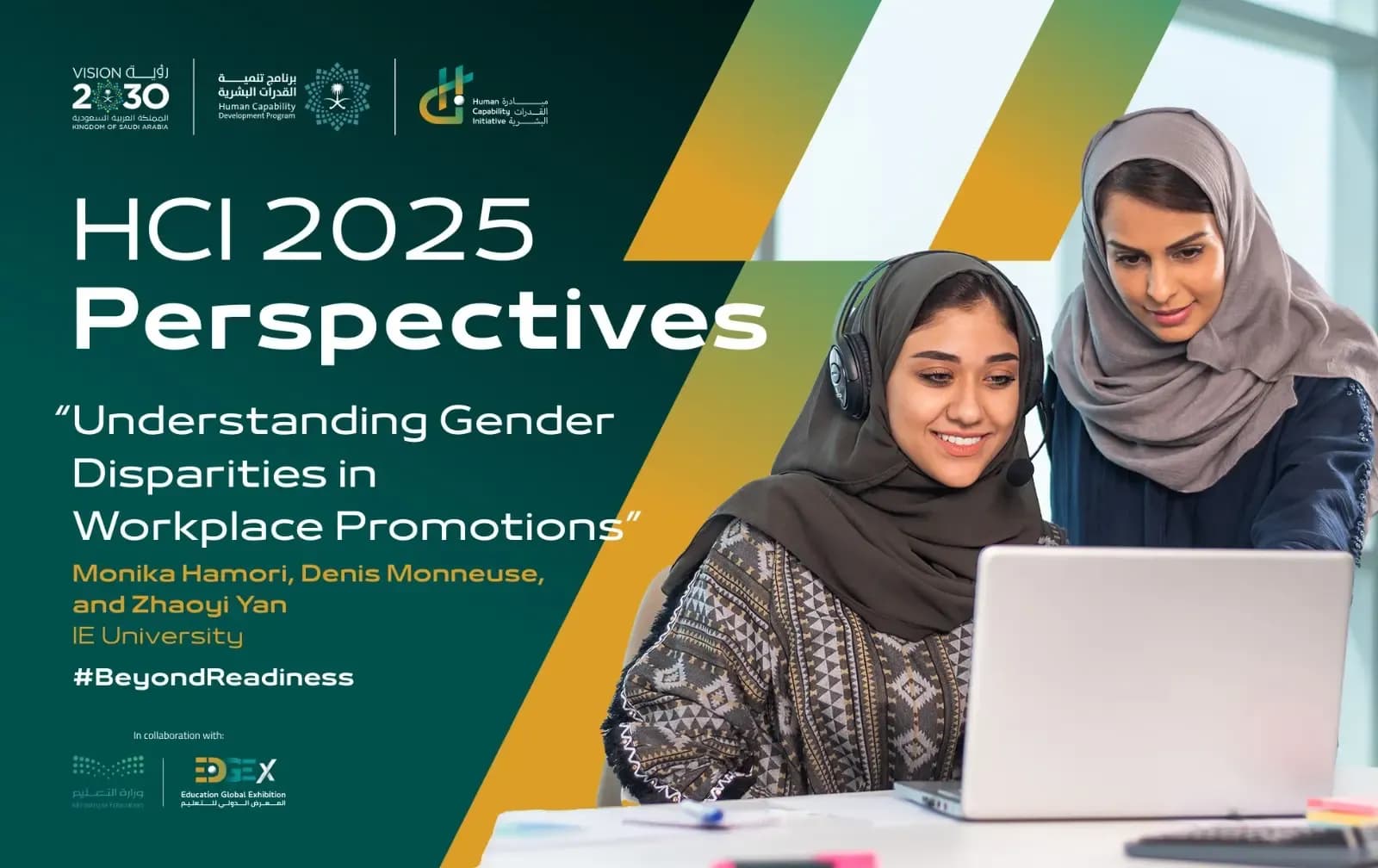
Despite decades of progress in achieving equity in the workplace, gender promotion gaps persist across industries and organizations. A recent study by Monika Hamori, Denis Monneuse, and Zhaoyi Yan offers significant insights into this persistent challenge by examining both employee-driven and employer-driven factors that influence career advancement. Their findings show significant implications for human capability development, as they highlight the importance of enhancing skills and capabilities, fostering inclusion and opportunity, and strengthening organizational practices in ensuring all workers, and particularly women, remain competitive and thrive in the job market.
Supply and Demand Factors in Promotion Disparities
The researchers analyzed nine years of personnel data from a European bank, revealing that promotion disparities are not simply the result of explicit bias. They emerge from a complex interplay of individual motivations and organizational structures.
The study shows that on the supply side, women are less likely than their male counterparts to express interest in changing roles or moving to different units within the organization. This difference creates a significant barrier, as job mobility frequently functions as a crucial pathway to career advancement. Notably, when women do express interest in new positions, they are just as likely as men to be reassigned, yet these moves less frequently result in promotions.
The study’s findings highlight that the demand side of the equation is equally important. In business units with limited open positions, women are less inclined to pursue career moves because opportunities appear scarce. Additionally, in departments where positions are already heavily occupied, the likelihood of securing a promotion diminishes for all employees, further reinforcing existing gaps.
Implementing Research-Based Strategies
Understanding these dynamics enables organizations to implement more effective strategies for addressing gender promotion disparities. Rather than focusing exclusively on combating explicit bias, the study shows that organizations should consider a multi-faceted approach.
1. Developing structured advancement programs through targeted training, mentoring, and coaching can provide women with the necessary resources to seek advancement opportunities. Providing constructive feedback on past applications offers valuable insights for navigating future promotion processes.
2. Enhancing transparency in promotion processes by implementing internal job boards and establishing accountability mechanisms ensures equal access to advancement opportunities for all employees.
3. Implementing customized strategies for interventions in business units, such as targeted career development initiatives, can address the specific challenges within each organizational division, as gender gaps may vary across different departments.
Advancing Organizational Equity
This research underscores a significant finding: gender promotion gaps stem from both personal motivations and organizational structures. By addressing both supply-side and demand-side barriers, organizations can create workplaces where career advancement reflects talent and potential rather than gender.
The path forward requires systematic efforts to remove barriers and establish organizational cultures where all employees have equal opportunities for professional development. Through these measures, organizations not only benefit from more diverse leadership but also maximize the potential of their talent resources.
The research insights provide valuable guidance for creating more inclusive and equitable pathways to leadership positions, ultimately contributing to more effective and representative organizational structures.
These findings align closely with the HCI theme of "Harnessing the Ways We Learn," particularly:
1. Enhancing skills and capabilities. The promotion of training and mentoring programs directly supports the upskilling of women. Ensuring that women develop the competencies needed for career advancement is necessary to enable them to remain competitive in the job market and find opportunities for career growth.
2. Fostering inclusion and opportunity. Structured support mechanisms and training programs can address systemic barriers and promote an inclusive environment where women can actively seek and achieve leadership roles.
3. Strengthening organizational practices. Embedding organizational practices that encourage women to seek new opportunities, such as targeted career development initiatives, ensures that women enhance their competitiveness in the workplace by continuously developing their capabilities and reinforces organizations’ commitment to equity in career progression opportunities.
By Monika Hamori, Denis Monneuse, and Zhaoyi Yan, IE University.
Disclaimer: This report has been prepared by IE University. The views and opinions expressed in this report are those of the authors and do not necessarily reflect the views, policies, or positions of the Human Capability Development Program (HCDP), the host of the Human Capability Initiative (HCI) conference.


.png&w=384&q=75)