

Everywhere, skills can transform futures, generate prosperity, and promote social inclusion. And if there is one lesson recent global crises have taught us, it is that for countries to grow and develop in the long run, they should equip more individuals with better skills to collaborate, compete, and connect in ways that drive their futures and countries forward. Growth and prosperity depend as much on skills as on physical capital, and one is much more difficult to develop and maintain than the other.
On average across countries, the median hourly wage of workers scoring at Level 4 or 5 in the OECD's Survey of Adult Skills, who can make complex inferences and evaluate subtle truth claims or arguments in written texts, is more than 60% higher compared to workers scoring at Level 1 or below, who can, at best, read relatively short texts to locate a single piece of information that is identical to the information given in the question or directive, or understand basic vocabulary. Those with low literacy skills are also more than twice as likely to be unemployed. The Survey also shows that this impact extends far beyond earnings and employment, as individuals with poorer foundation skills are far more likely than those with advanced literacy skills to report poor health, believe that they have little impact on their communities, and not participate in associative or volunteering activities in their communities.
To successfully convert skilling and educational opportunities into better jobs and futures, we need to better understand what those skills are that drive outcomes, ensure that the right skill mix is being learned at the right time, widen our understanding of where skills can be acquired, and help economies make good use of those skills.
The essential starting point for that is to better anticipate and respond to the evolution of skill demand in societies. The dilemma for educators today is that the skills that are easiest to teach and test are also the skills that are easiest to digitize, automate, and outsource. Put simply, the world no longer rewards individuals just for what they know, Google and ChatGPT give the sense of knowing everything, but for what they can do with what they know. Government and business need to work together to gather better evidence about skill demand, both for the present and the future, which can then be used to future-proof education systems.
Skill development would also be far more effective if the world of learning and the world of work were more closely connected. Compared to purely government-designed curricula taught exclusively in schools, learning in the workplace can allow individuals to develop hard skills, such as the use of modern equipment, and soft skills, such as teamwork, communication, and negotiation through real-world experience. Sitting less through exams and engaging in more hands-on workplace training is an effective way to motivate disengaged youth to re-engage with education and smoothen their transition into work. Countries that have implemented such programs succeed in preventing school dropout and increasing employment by offering more varied educational approaches, and by engaging youth in work experience before they leave education.
But learning the right things is just one part of the equation. It is equally important for youth to develop a good understanding of how and where skills can be put to good use. Data from the Programme for International Student Assessment (PISA) show growing uncertainty among students in choosing their career pathways, as labor markets have become more complex and much harder to navigate. But public policy can address this challenge by enabling them to gain hands-on experiences through volunteering or part-time employment. As the data from PISA show, career aspirations of students frequently bear little connection with actual patterns of labor market demand and reveal consistent patterns of concern in relation to lower achievers and students from more disadvantaged social backgrounds. Ensuring youth’s early participation in the workplace and enabling them to explore various career options can enhance their ability to make more informed educational and career decisions that support their future prospects. This will not only facilitate smooth school-work transitions, but will also motivate youth to learn what matters for their future.
Young people cannot be what they cannot see, and they often make the most important career decisions not when they leave school, but when they commence school. This is the moment when children decide whether investing time and energy in learning at school is worth it and which subjects they will take seriously. To aid this, schools need to help students understand their talents, the skills they can become really good at, and which of these skills are most important for the future. Girls and students from the most disadvantaged backgrounds have the most to gain from more effective career guidance. Technology, and AI in particular, can help in improving career guidance. Some countries also have implemented measures proven to be effective in this regard, including offering counselling sessions, job-search assistance, temporary hiring subsidies for low-skilled youth, and linking income support for youth to active job search and engagement in measures to improve employability.
Skills have become the global currency of 21st-century economies. But this currency can depreciate as the requirements of labor markets evolve and individuals lose the skills they do not use. Therefore, working-age adults also need to develop their skills so that they can progress in their careers, meet the changing demands of the labor market, and avoid losing the skills they already acquired. To achieve this, a wide spectrum of full- or part-time adult-learning activities needs to be available, including work-related employee training, formal education for adults, second-chance courses to obtain a minimum qualification or basic literacy and numeracy skills, language training for immigrants, labor-market training programs for job-seekers, and learning activities for self-improvement or leisure.
To facilitate this, governments need to design financial incentives and tax policies that encourage individuals and employers to invest in post-compulsory education and training. Some individuals can shoulder more of the financial burden for tertiary education, and funding can be linked to graduation rates, provided individuals have access to income-contingent loans and means-tested grants. As the OECD analysis shows, there is much that can be done to dismantle barriers to participation in continued education and training.
This includes making the returns on adult education and training more transparent so users are more motivated to invest; providing a combination of easily searchable, up-to-date online information on educational opportunities, personal guidance, counselling services, and possible funding sources; offering clear certifications of learning outcomes and recognizing nonformal learning; ensuring that programs are relevant to users and flexible enough in both content and delivery to adapt to adults’ needs; and ensuring all learning paths are equally valued by treating education and training as part of the same learning ecosystem that caters to young and old alike.
Building skills is still the easier part; far tougher is providing opportunities for young people to use their skills and have an impact on the economy and society. Data from the OECD’s Survey of Adult Skills show that skills mismatch is a serious challenge, as it is mirrored in individuals’ earnings prospects and productivity. Knowing which skills are needed in the labor market, which educational pathways will enable youth to achieve their goals, and which skills will enable adults to remain competitive in the future of work is essential now more than ever. There is a big role for governments to play in reducing skills mismatch in the job market, including enforcing fair labor policies that protect new entrants to the job market, offering tax and financial incentives for employers who offer on-the-job training, and aligning education systems with labor market needs. But none of this will work without cross-sectoral collaboration. Educational institutions and employers should collaborate with governments in providing opportunities for skilling and reskilling, for example by offering and financing high-quality vocational and skills training. As recent global trends show, inaction is not neutral, it may prove costly to both current and future generations.
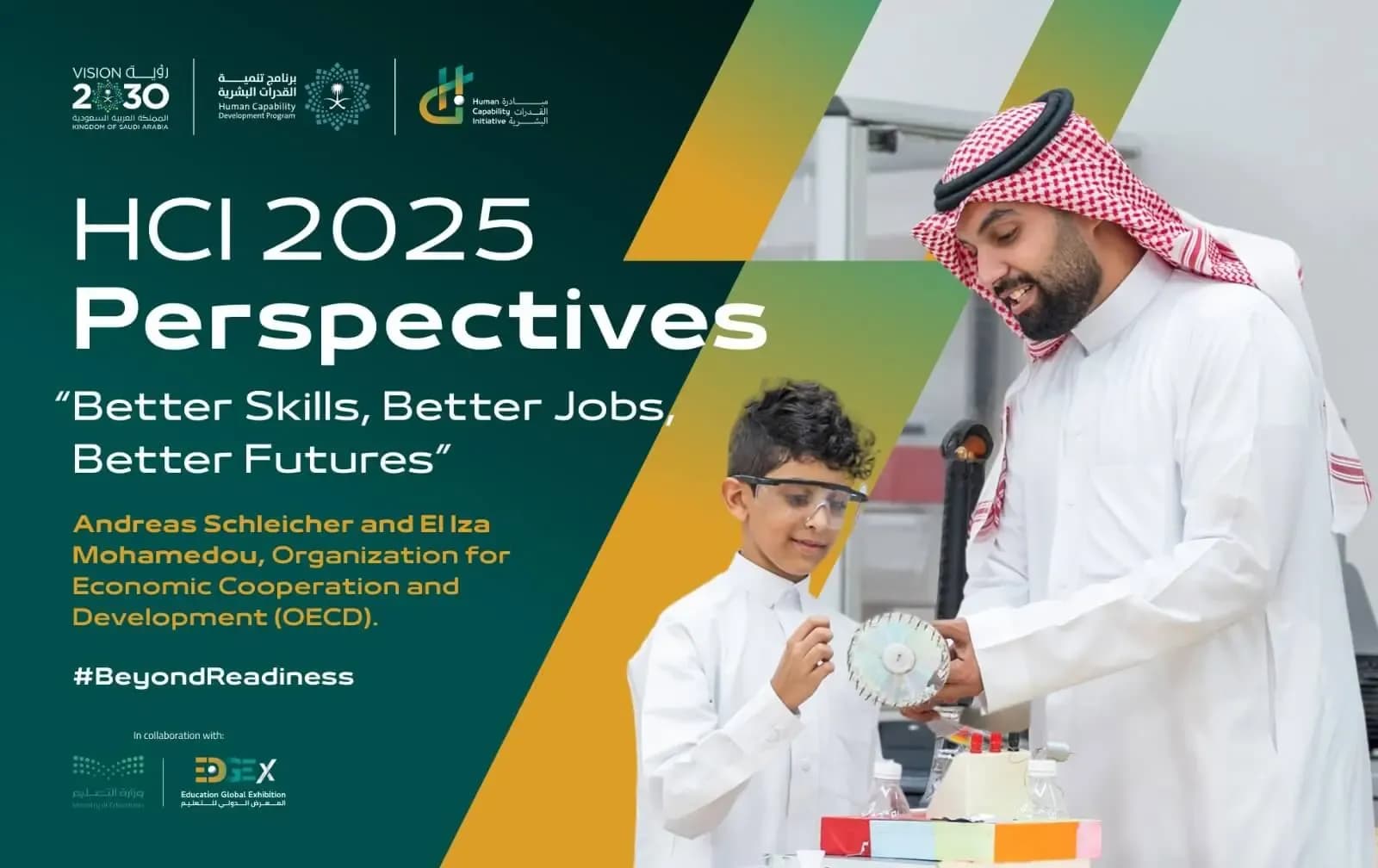
By Andreas Schleicher and El Iza Mohamedou, Organisation for Economic Co-operation and Development (OECD).


.png&w=384&q=75)